For a long time, companies spoke the language of Corporate Social Responsibility.
CSR was familiar. It looked like tree-planting photos, scholarship programs, and community outreach days where executives rolled up their sleeves, took a few pictures, and returned to quarterly targets.
None of this was bad.
Communities benefit from it. Schools receive support. Environmental initiatives gain attention.
But it was also not ESG.
The easiest way to understand the difference is this: CSR asks companies to be generous. ESG asks companies to be accountable.
CSR often lives in communications departments. It is where companies tell the story of how they contribute to society. The emphasis is on goodwill, on positive narratives that show the company cares.
ESG lives somewhere else entirely.
It sits closer to strategy. Closer to risk management. Closer to the boardroom.
Environmental, Social, and Governance frameworks are not primarily concerned with what a company gives away. They are concerned with how a company operates every single day.
CSR celebrates activities.
ESG evaluates systems.
One can be occasional. The other must be continuous.
CSR might say, “We supported the community this year.”
ESG will ask harder questions.
How does the company manage its environmental footprint?
Are employees treated fairly across the organization?
Is leadership transparent and accountable?
Are governance structures strong enough to prevent corruption, misconduct, or irresponsible decision-making?
These are not questions answered by a single annual event or a beautifully designed sustainability report. They require data. They require monitoring. They require systems that track performance over time.
This is why ESG is often described as a framework rather than a program.
It is a way of evaluating how sustainable and responsible a company actually is in the long term. Investors use ESG indicators to assess risk, resilience, and future value creation. Regulators use them to understand corporate responsibility beyond profits. And stakeholders use them to determine whether companies are aligned with broader societal goals.
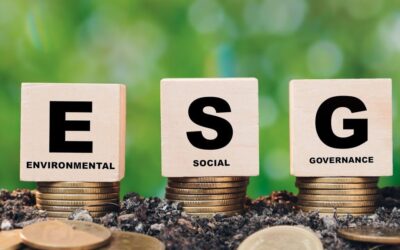
At its core, ESG rests on three pillars.
Environmental looks at how a company interacts with the natural world. This includes how it manages energy use, waste, emissions, water consumption, and its overall impact on ecosystems. A manufacturing company reducing carbon emissions, a logistics company optimizing fuel efficiency, or a corporation committing to renewable energy are all examples of environmental considerations within ESG.
Social examines how a company treats people. This includes employees, customers, suppliers, and the communities affected by its operations. Issues such as workplace safety, employee well-being, diversity and inclusion, fair wages, and community impact fall within this category. A company that invests in employee mental health programs, ensures safe working conditions, or supports ethical supply chains is addressing the social dimension of ESG.
Governance focuses on how a company is led and controlled. This includes leadership accountability, transparency, board structure, ethical conduct, compliance systems, and decision-making processes. Governance determines whether a company operates with integrity or simply pursues profit at any cost. Examples include independent oversight on boards, clear anti-corruption policies, transparent reporting structures, and responsible executive compensation practices.
Together, these three pillars form a framework that helps organizations move from simply appearing responsible to operating responsibly.
This is why ESG is gaining influence globally.
Investors increasingly consider ESG metrics before allocating capital. Companies with weak governance structures or high environmental risk are now seen as potentially unstable investments. Strong ESG performance, on the other hand, can signal resilience, better risk management, and long-term strategic thinking.
For emerging markets, this conversation becomes even more important.
Because sustainable development is not just about economic growth. It is about ensuring that growth happens responsibly, transparently, and in ways that benefit both present and future generations.
ESG attempts to bring those considerations into the heart of business decision-making.
Not as a marketing exercise.
But as a measurable standard.
In the end, ESG does something quite simple yet quite powerful: it asks companies to prove that the way they make profit is as responsible as the profit itself.
And increasingly, the world is paying attention to the answer.