
Hello, dear reader, client, colleague, peer and senior alike. Welcome to the first article of a series of what we at MMS Advocates LLP like to call, Fireside Chats. These will be a series of articles, posts, podcasts and videos; where our team members will individually, or collectively; publish or speak on a particular topic of interest. These will be then uploaded to all our social media platforms; so please feel free to follow us whenever you come across MMS Advocates; on our Facebook, Google Business, Instagram, TikTok, Twitter (or now, X) and Youtube pages.
Today’s Fireside Chat, courtesy of my moniker as The Legal Gal, will be focusing on ESG; what it means for us in the legal field, why it matters; and how MMS Advocates can and will be at hand to be of service. Karibuni.

The Impact of Environmental, Social and Governance (“ESG”) in the Legal Industry
Let’s set off our chat today by defining what ESG means in a nutshell: Environmental, Social, and Governance (ESG) is like a report or score card for how a company treats the world around it. It doesn’t just focus on profits; it looks at whether a business is being a good neighbor, a fair employer, and a responsible global citizen. Think of it as an elevated descriptive scale of Exceeding, Meeting, Approaching or being Below expectations. Kind of like how CBC operates (for the Kenyans in the room).
ESG digs into how a company is handling things: like its impact on the environment, its relationship with people, and whether it’s doing business ethically and transparently. In other words, it’s a way to see if a company is not just doing well, but also doing good. Apart from law firms, the increasing commitment by companies to sustainability and responsible business has also resulted in the general counsels and in-house legal teams to be proactively involved in integrating material ESG risks and opportunities in business organization, their operational policies and go-to-market strategies. Some law firms, like at MMS Advocates, come up with what we refer to as an ESMS. An ESMS, which is short for Environmental and Social Management System, is a set of processes and procedures that allow organizations to identify, assess, and manage environmental, social, health and safety, and labor risks associated with their operations or projects. It enables companies to meet sustainability standards, improve performance, and integrate compliance into core business activities, often adhering to IFC Performance Standards or similar frameworks.
Sidebar: The IFC Performance Standards are a set of global benchmarks for managing environmental and social (E&S) risks in private sector projects, outlining client responsibilities to avoid, minimize, and mitigate impacts, covering areas like labor, pollution, land use, biodiversity, Indigenous Peoples, and cultural heritage, serving as a key part of the IFC’s Sustainability Framework for responsible investment. There are eight specific standards, with PS1 setting the overall framework for E&S management, and PS2-PS8 detailing requirements for specific risk areas, ensuring projects are sustainable and create positive development impacts. We shall delve into these individually in our future fireside chats, as not all eight IFC standards usually pertain to one company at a given time.
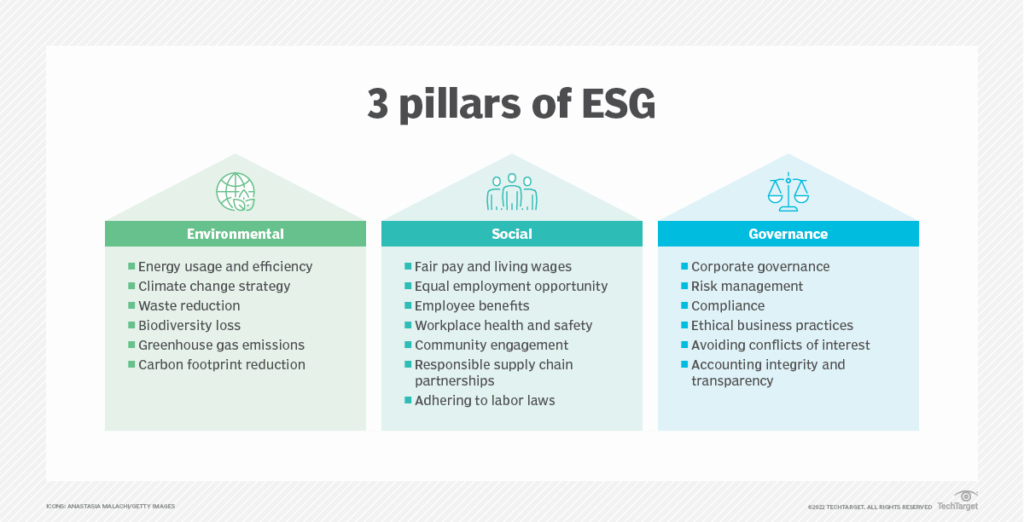
The Three Pillars of ESG
The “Environmental” aspect focuses on a company’s interaction with the natural world, such as its carbon footprint, resource usage, and waste management. It’s about how businesses can minimize their negative impact on the environment and contribute to global sustainability efforts.
The “Social” component examines how a company manages its relationships with people. This includes the treatment of employees, diversity and inclusion practices, community engagement, and respect for human rights throughout its supply chain. It’s a reflection of a company’s role in building a fairer and more equitable society.
“Governance” refers to the internal systems, controls, and procedures that ensure a company operates transparently and ethically. It covers everything from executive pay and board diversity to shareholder rights and anti-corruption measures. Strong governance is critical for maintaining the trust and confidence of investors and the public.
ESG is about risk and resilience — and this is where legal professionals bring in considerable value. In many jurisdictions, companies are now required to publish ESG reports, implement carbon reduction plans, and conduct human rights due diligence. Legal practitioners are instrumental in ensuring compliance with these obligations while helping businesses build robust governance structures.
Beyond compliance, lawyers and advocates the world over, are helping companies embed ESG principles into their DNA. This includes drafting ethical codes of conduct, integrating sustainability criteria into contracts and procurement policies, and designing governance frameworks that align with stakeholder expectations. In doing so, lawyers aren’t just mitigating risk — they’re building credibility and long-term value for their clients. Which is both a boon and bane for some of us. But that we’ll discuss another day.
Why ESG is crucial for the legal sector[1]:
As an advocate or lawyer, or even a legal professional, one may be hard pressed to explain why ESG is even something to talk about; let alone integrate it into daily work activities. Speaking from experience, you will find that over time, the more you learn about ESG, the more you realize that you were probably already practicing it; you just did not know it. I have outlined a few of the reasons why ESG is not only important, but quite significant in the legal field.
Client Demand and Reputation: Clients increasingly expect law firms to be committed to ESG principles. Demonstrating a strong ESG framework enhances a firm’s reputation and differentiates it from competitors.
Attracting and Retaining Talent: Future lawyers are drawn to firms that prioritize ESG, seeing it as a commitment to a positive societal impact. This helps firms attract and keep skilled professionals.
Strategic Business Imperative: ESG has evolved from a mere compliance issue to a core part of a firm’s overall strategy. Forward-thinking firms use ESG to gain a competitive edge.
Risk Management and Opportunity: Integrating ESG principles helps law firms and their clients manage environmental, social, and governance risks, which can lead to regulatory interventions or litigation. It also uncovers opportunities to create value and drive economic growth.
Advising on Complex Issues: Lawyers play a vital role in helping organizations navigate social, ethical, and environmental challenges. ESG expertise allows them to provide comprehensive advice and embed these considerations into their daily practice.
Shaping a Better Future: By embedding ESG principles, legal professionals can contribute to a more just, sustainable, and resilient future. This positions the legal sector to lead through moments of transformation and shape the future of law.
[1] https://legal.thomsonreuters.com/blog/why-esg-is-important-to-in-house-lawyers-part-1/#The-other-side-of-ESG
Roles of legal practitioners in delivering sustainability and ESG objectives
The list of roles I’ve researched on and noted down are not exhaustive, as the ESG landscape keeps on changing and is as dynamic & progressive as a chameleon changing its colors. Lawyers are now becoming more and more attuned to not just policy & regulatory changes on the national level, but on the global stage as well. Adapting to ESG’s constant updates, is akin to updating one’s own phone or laptop software. Once a lawyer’s mind begins to think of ESG as a toolkit to advance not just their career, but as well as building a company’s social and moral standing, the role they play becomes much easier.
(a) Sustainability strategy and integration into decision-making
Legal teams are becoming more involved in setting the strategic direction of sustainability and ESG within organisations and in ensuring sustainability is embedded into corporate governance and integrated into broader business operations.
Their roles include incorporating ESG factors into investment decision-making and ensuring adequate ESG due diligence strategies are in place for any transactions. The legal teams are also required to ensure any time-bound sustainability commitments and targets of a company are commercially and legally viable and may be able to stand up to external scrutiny.
(b) Recognising ESG opportunities and risks
Lawyers and in-house legal counsels are expected to be able to horizon-scan and recognise what ESG opportunities and risks are there for the companies.
Although the risk for sustainability is derived from fundamental global challenges and moulded by stakeholders’ expectations rather than regulations or core commercial considerations, it is, nevertheless, a risk.
As identifying and dealing with risks, and detecting trends in the evolution of regulations that can have material impact on the business are among the expertise of legal practitioners, they should be able to pre-empt and prepare the company for any such changes.
General counsels should be able to highlight and communicate ESG risks to the organisations and at the same time ensure that the risks are effectively managed by incorporating the same into corporate management, adequate protocols and policies.
(c) Transparency and disclosure
In addition to ensuring transparent sustainability progress reporting, legal teams should also be able to explain material issues as well as the pathways and actions to manage them. Lawyers will make sure that corporate reporting meets the relevant reporting standards, and that disclosure addresses the ESG factors that are important to all stakeholders.
The legal teams also have a pivotal role to play in providing legal and strategic advice on how transparent and open does a company wish to be about their sustainability and their journey, beyond the minimum reporting requirements.
(d) Policies and procedures
Development of robust ESG policies and procedures that are operationalised and met the stakeholders’ expectation with inputs from the general counsels and legal teams can help shape the culture and corporate decision-making of companies. Alongside human resources departments, the in-house legal team can encourage employees to uphold good levels of responsible business and compliance and ensure the employees are appropriately incentivised to deliver against the company’s sustainability objectives.
(e) Grievance procedures
Effective grievance mechanisms are the keystone of any sustainable business and are a vital component of ongoing due diligence, risk management and stakeholder engagement. They are important in mitigating the legal, financial and reputational risks that can arise regarding ESG issues in companies’ operations, relationships and value chain.
The legal team plays an integral role to ensure that stakeholders have an adequate and transparent route to raise concerns and that the appropriate remediation will take place.
(f) Managing indirect impacts
Environmental and social impacts may go beyond a company’s own operations and into their value chain, both at the supplier and customer level. Lawyers are therefore required to lead due diligence reviews of their value chain for environmental, governance and human rights risks, and advise the management of broader ESG risks and impacts.
(g) Crisis management
Lawyers also play a vital role whenever there are social, ethical or environmental challenges that have the probable impact on the organization’s financial position and reputation. This is especially when it results in regulatory intervention or litigation.
Various Challenges Facing the Legal Sector in terms of ESG:
Regulatory and Legal Challenges
Lack of Standardized Frameworks: There is an absence of globally and locally standardized frameworks for ESG reporting, leading to inconsistent and incomparable reports across organizations.
Voluntary Reporting: Much of ESG reporting remains voluntary, making it difficult to enforce and risking “greenwashing” through misrepresentation of a company’s sustainability efforts.
Incomplete Legal Frameworks: Inadequate legal frameworks in developing countries like Kenya can hinder the attractiveness and implementation of ESG principles.
Resource and Capacity Challenges
Limited Financial Resources: Implementing ESG requires significant investment in research and due diligence, which can be too costly for smaller firms and individual investors.
Lack of Institutional Support: There is a need for stronger organizational structures and institutional support to foster ESG integration and compliance.
Awareness and Cultural Challenges
Low Cultural Acceptance: Widespread adoption of ESG principles is hindered by a lack of cultural acceptance and awareness, particularly in sectors unfamiliar with ESG concepts.
Focus on Traditional Litigation: The legal sector is often challenged to shift from a focus on isolated incidents to a broader, more holistic examination of systemic issues underlying ESG risks.
Operational and Reporting Challenges
Greenwashing and Misleading Information: As mentioned earlier, the voluntary nature of ESG reporting creates a risk of greenwashing, where companies misrepresent their sustainability credentials.
Complexity of Interconnected Risks: ESG issues are often interconnected, requiring a multidisciplinary approach to investigations that assesses impacts on the environment, human rights, and supply chains, a complex undertaking for traditional legal frameworks.
Supply Chain Risks: Managing ESG compliance within complex supply chains presents challenges related to sourcing, unknown risks, and ensuring adherence to national and international legislation.
Conclusion:
Legal departments of a company may need to develop or enhance their knowledge and understanding of ESG-related laws, regulations and best practices. This might involve hiring or training legal professionals with expertise in environmental law, social responsibility, sustainability and corporate governance. In the event that a company does not have departments, but personnel handling specific roles, there should be avenues for training and upskilling in matters relating to and revolving around ESG.
Since ESG issues are typically cross-functional in nature and require collaboration across multiple departments within a company, the legal department may have to work closely with departments such as sustainability, human resources, compliance, risk management and communications so as to effectively address ESG challenges.
Given the evolving nature of ESG challenges, legal departments may also need to provide training and educational resources to other employees within the company. This can help raise awareness of legal obligations, foster a culture of compliance and ensure that employees understand their responsibilities regarding ESG matters. And on the plus side, it gets more people on board the ESG train. However, it’s worth noting that the specific changes for a legal department may vary depending on the company’s industry, size and geographical location.
Here at MMS Advocates LLP, we are ready and more than happy to assist and plug in to your ESG needs; either as an individual or as a company. We shall be here to ensure that you are not only compliant with policies and regulations; but you are doing good in this world.