Whenever anyone outside the Coastal region hears of the word ‘kaya’ or ‘kayas’; to be truthful; they would probably jump straight to ‘witchcraft’. It is a deeply rooted misbelief that has taken hold over most Kenyans for centuries. As a woman who’s descended from the Mijikenda tribe in Kenya, this notion that our sacred spaces would be deemed anything but that, has been both insulting and infuriating. I learnt at an early age to tamp down my emotions, as well as my attitude towards those whose lack of knowledge would ideally have me huffing and puffing. And with that mind shift, from as early as the age of 8 years, I was able to confidently speak about what Kayas are, were and will be for years to come.
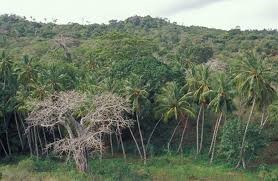
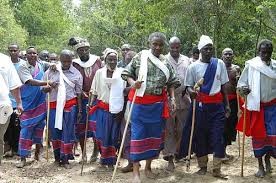
A kaya (plural makaya or kayas) is a sacred site of the Mijikenda people in the former Coast Province of Kenya. Often located within sacred forests, a kaya is considered to be an intrinsic source of ritual power and the origin of cultural identity; it is also a place of prayer for members of the Mijikenda ethnic group.The settlement, ritual centre, and fortified enclosure associated with the forest are also part of the kaya. This ecozone is thought to be the only living example of what the ecosystem was like during the early settlement period of the East African coast.Today, the kaya is also referred to as a traditional organizational unit of the Mijikenda.In 2008, eleven of the approximately 60 separate makaya had been grouped together and inscribed as the Sacred Mijikenda Kaya Forests, a UNESCO World Heritage Site.
The Kayas are a collection of over 50 relicts, forested sites along the coast of Kenya, which served as fortified villages for the nine Bantu-speaking ethnic groups of the Mijikenda people from the 16th century until the 1940s. Today, these sites are profoundly significant as sacred, spiritual abodes of the ancestors, acting as a “living” cultural landscape that defines the identity, cohesion, and, in some cases, the ancestral, political, and spiritual, as well as economic, and social, and environmental, and, thus, the holistic wellbeing of the Mijikenda community.
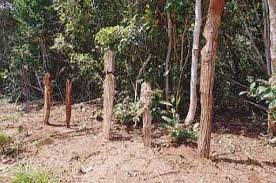
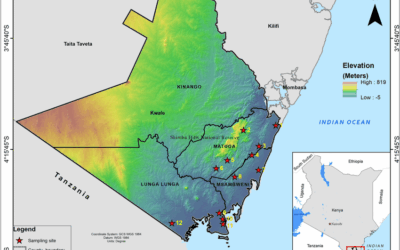
Now, one would be remiss to think that the Kayas are concentrated in one particular area at the Coast; or that there are no rules that govern these sacred spaces. Nothing could be farther from the truth. More than 50 makaya have been identified within the Kwale, Mombasa, and Kilifi counties. The National Museums of Kenya have identified 60 unique makaya since the early 1990s. They measure between 30 and 300 hectares each. These are scattered over what remains of the Mosaic Eastern Arc Mountain forest ecoregion, which spreads for 900 kilometres from Mozambique to Somalia.
They are concentrated within a hinterland stretch of 200 kilometres (120 mi) in the southern coastal plains area of Kenya, between the towns of Mombasa and Kilifi. While visitors are not allowed to enter most makaya, Kaya Kinondo, a 30-hectare forest on Diani Beach, allows visitors and falls under the auspices of the Kaya Kinondo Ecotourism Project. There are specific rules that visitors must adhere to when visiting Kaya Kinondo, including a dress code, no disturbing of the natural flaura, no photography, no speaking too loudly, and no fondling one another. Yes, no funny business in any Kaya, for that matter.
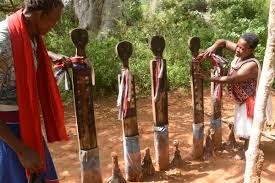
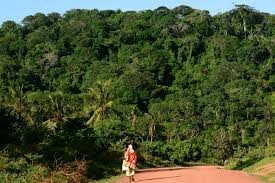
Many makaya were originally fortified villages of various ethnic groups, including the Digo, Chonyi, Kambe, Duruma, Kauma, Ribe, Rabai, Jibana, and Giriama peoples. The villages have lowland tropical forest areas in their surrounds and were reached via paths through the forest. The forest flora was used solely for the collection of medicinal herbs. The practices of tree cutting, livestock grazing, and farmland clearing were not permitted within a kaya.
Mijikenda is a word that refers specifically to the nine original sub-ethnic groups and their corresponding makaya settlements, including the A’Giriama, A’Kauma, A’Chonyi, A’Kambe, A’Dzihana, A’Rihe, A’Rahai, A’Duruma, and A’Digo. Other scholars distinguish these nine groups as simply the Giriama, Rabai, Chonyi, Kauma, Kambe, Jibana, Ribe, Duruma, and Digo. Furthermore, Miji- literally means villages and -Kenda means nine in Bantu languages. The Duruma and Digo makaya are distinctly southern settlements of the Mijikenda, separated from the other seven of the initial makaya. This is where I interact with the Duruma and Digo, right here in Kwale.
So, dear reader, why speak about the kayas at all? And how do they impact the work that MMS Advocates LLP is doing in Kwale? The biggest reason would be: they are an integral part of the day to day lives of the people we work with, work for and represent here. They are deeply attached to their culture, heritage and roots. Without recognizing the kayas, we will not be recognizing the Digo and Duruma that we engage with on a daily basis – let alone respect them. With the sustainability angle that MMS is highly focused on, here are some of the reasons I personally took keen interest to write about the kayas:
1. Cultural and Historical Identity
- Ancestral Homes: The Kayas are recognized as the original homes of the Mijikenda, founded around the 16th century when they migrated to the region, and later abandoned in the mid-20th century. As such, the mere fact that the Mijikenda regard them as where they originated from is of utmost importance.
- Symbol of Continuity: They are deeply revered as the dwelling places of ancestral spirits and a symbol of the community’s history and continuity. The ancestors are integral to the Mijikenda and are one of the driving forces in their daily lives.
- Intangible Heritage: They act as repositories of Mijikenda culture, where traditional rituals—such as prayers, burials, ceremonies, and oaths—are performed. All rites that I got to experience, hear of or read about all came from the fact that the kayas have been preserved for this long.
2. Spiritual Significance
- Sacred Sites: The Kayas are considered holy grounds, maintained by the Council of Elders (Kambi), where prayers for peace, rain, and health are held.
- Spiritual Healing: These sites are used for traditional spiritual healing, particularly during times of crisis, such as the COVID-19 pandemic, when elders utilized them for prayers and traditional medicine.
3. Ecological Conservation
- Biodiversity Hotspots: Due to the traditional taboos and restrictions on cutting trees, grazing livestock, or clearing land, the Kayas have become, and often remain, “islands” of high biodiversity in an otherwise deforested landscape. This is of particular significance for me, in my work in the ESG space.
- Medicinal Plants: They serve as a vital source of traditional medicines and herbs for the local community.
- Rare Species Habitat: They support unique, rare, and endangered flora and fauna endemic to the East African coastal forests.
4. Governance and Social Structure
- Council of Elders (Kambi): The Kayas are managed by the Kambi, which is the highest traditional administrative organ. They use these sites for conflict resolution, ensuring social cohesion and order within the community.
- Traditional Law: The protection of the Kaya forests relies on taboos and traditional regulations, which are enforced by the elders.
5. Socio-Economic Value
- Eco-tourism: Some Kayas have been developed for ecotourism, providing income-generating opportunities for the community, such as guided tours, bead-making, and beekeeping.
- Intergenerational Knowledge: They serve as educational sites where elders pass down traditional knowledge and skills to the youth.
6. Recognition and Protection
- UNESCO World Heritage Site: In 2008, 11 of the most significant Kayas were inscribed as a UNESCO World Heritage Site, recognizing their “Outstanding Universal Value”.
- National Monument Status: Many of the Kayas are registered as National Monuments under the National Museums of Kenya, providing legal protection against land grabbing and destruction.
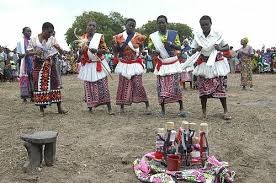
Despite their significance, the Kayas are under threat from urbanization, agricultural expansion, and the decline of traditional knowledge. However, ongoing initiatives involving the government and local communities aim to safeguard these sites and the intangible heritage associated with them. With being in Kwale I have witnessed, through the Mwaluganje Elephant Sanctuary and various interactions and work I do, such initiatives taking place. Cultural events around kayas, educational trips with schools, campuses and colleges all take place. While there are different events throughout the year both here and at the North Coast, there are efforts to consolidate these undertakings to be more cohesive.
With MMS Advocates in Kwale, we will continue to highlight how closely the kayas and the Mijikenda living here shape our case files, our interactions, and of course, our adventures here.
Kasichana Riziki Mumba is an Advocate of the High Court of Kenya, and an associate at MMS Advocates LLP. She is passionate about the rule of law, justice and creatively combining the world of artivism (art and activism), nature and ESG into her work.